
Table of Contents
Main Fact:
The demand for rice from Canada is increasing every year, with the present demand of around 530, 000 MT (metric tons). Most Canadian households and commercial food chains mainly consume basmati rice. That is why Canada imports around 100, 000 MT (metric tons) of basmati rice. Out of this, around 96,562 MT (metric tons) of basmati rice is sourced from India every year. It has become possible only with the support of a trusted basmati rice exporter from India.
Introduction
We at Shree Krishna Exports, being a leading basmati rice brand from India, are successfully exporting basmati rice to Canada and North America. The Canadian importers and businesses prefer exporters who offer a wide range of basmati rice, maintain consistent quality, supply in bulk quantity, offer proper branding & labelling, and meet all import-export certifications for exporting basmati rice to Canada. Basmati rice exporter meet most of these requirements, but they often fail to fulfil all key certifications.
As a reliable brand, we are here to highlight those certifications so that exporters can easily meet the requirements of Canadian businesses. These certifications help maintain food safety, quality standards, and smooth customs clearance while building trust among global buyers and distributors.
What are Canada’s Food Import Rules for Basmati Rice?
Every food product shipment entering Canada goes through strict quality and documentation checks. The food products, including basmati rice, must meet hygiene, packaging, and labelling standards stated by Canadian authorities. It is one of the major reasons why buyers in Canada usually prefer suppliers who follow proper export procedures. It reduces shipment delays and quality-related concerns.
Key Certifications Required
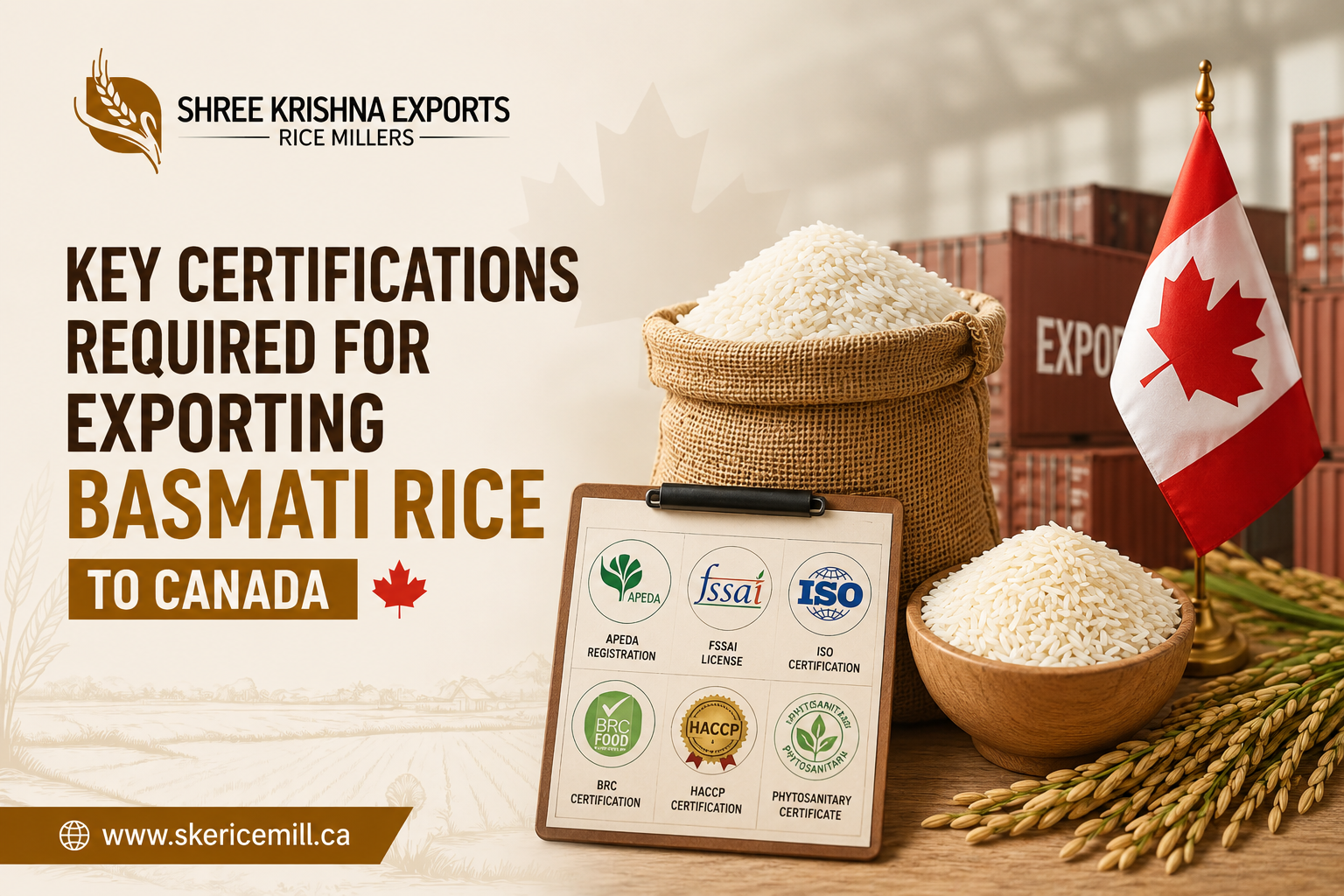
Below, we have shared a few major certifications that are a must for exporting basmati rice from India to Canada. These certifications are a must to follow for every basmati rice exporter from India for successful business trade. The certification includes:
APEDA Registration
Agricultural and Processed Food Products Export Development Authority (APEDA) is one of the most important certifications that every rice exporter must fulfil. Without APEDA registration, exporters cannot legally export basmati rice from the country, as it helps in:
- Legal authorisation for rice export
- Quality monitoring of export products
- Acceptance in international markets
- Participation in global trade activities
FSSAI Certification
Food quality remains one of the biggest concerns in international trade. And FSSAI certification confirms that rice products meet all Indian food safety standards. Canadian buyers and importers prefer choosing a basmati rice exporter that maintains proper hygiene and food-grade handling processes. It helps maintain:
- Safe processing practices
- Clean packaging environments
- Proper storage conditions
- Better traceability during export
Phytosanitary Certificate
Agricultural exports like rice export require phytosanitary certification to confirm that the rice shipment is free from harmful pests and plant diseases. Canadian authorities carefully inspect imported food products, especially agricultural goods, before allowing entry into the market. The phytosanitary certificate is issued after inspection by authorised government departments. It confirms that the rice has been processed and packed under safe agricultural conditions. Delays in obtaining this certificate can slow down customs clearance, which is why exporters prepare these documents carefully before shipment.
ISO Certifications
International buyers prefer exporters who follow all standard quality regulations, and ISO certifications help them in the same. Rice exporters are expected to meet these ISO certifications:
- ISO 22000 for food safety management
- ISO 9001 for quality management systems
Organic Certifications
The Canadian market most demand for organic food products, and that is why they need organic basmati rice. They look out for Indian exporters who are certified organic rice suppliers. This helps them fulfil the demand of health-conscious consumers across Canada and North America. Exporters supplying organic rice should maintain proper farming records and certification documents to meet international inspection standards. This helps attract restaurants, health stores, and organic food distributors looking for reliable Indian suppliers.
Proper Documentation
International shipments not only involve the above-stated certifications. But several other documents are a must to export basmati rice from India to Canada. Some of the important documents include:
- Commercial invoice
- Packing list
- Bill of lading
- Certificate of origin
- Insurance documents
- Inspection reports
An experienced Basmati Rice Exporter from India keeps these documents updated and organised before shipment dispatch. This helps maintain smooth communication with freight companies, customs departments, and overseas buyers.
Conclusion
Export of rice from India to Canada requires proper certifications, food safety approvals, and export documentation for maintaining smooth international trade operations. By ensuring that all the above-stated certifications are met, basmati rice exporters from India can successfully export rice to Canada, North America, and other countries across the globe. We at Shree Krishna Exports, being one of them, have built long trade relationships with Canadian buyers by offering them quality-tested basmati rice and meeting all required export practices that help meet international market expectations.
FAQs (Frequently Asked Questions)
APEDA registration is mandatory for exporting basmati rice from India.
It confirms that the rice shipment is free from pests and plant diseases.
Yes, Canadian authorities verify labelling details before approving imported food products.
It shows that the exporter follows proper food safety management systems.