
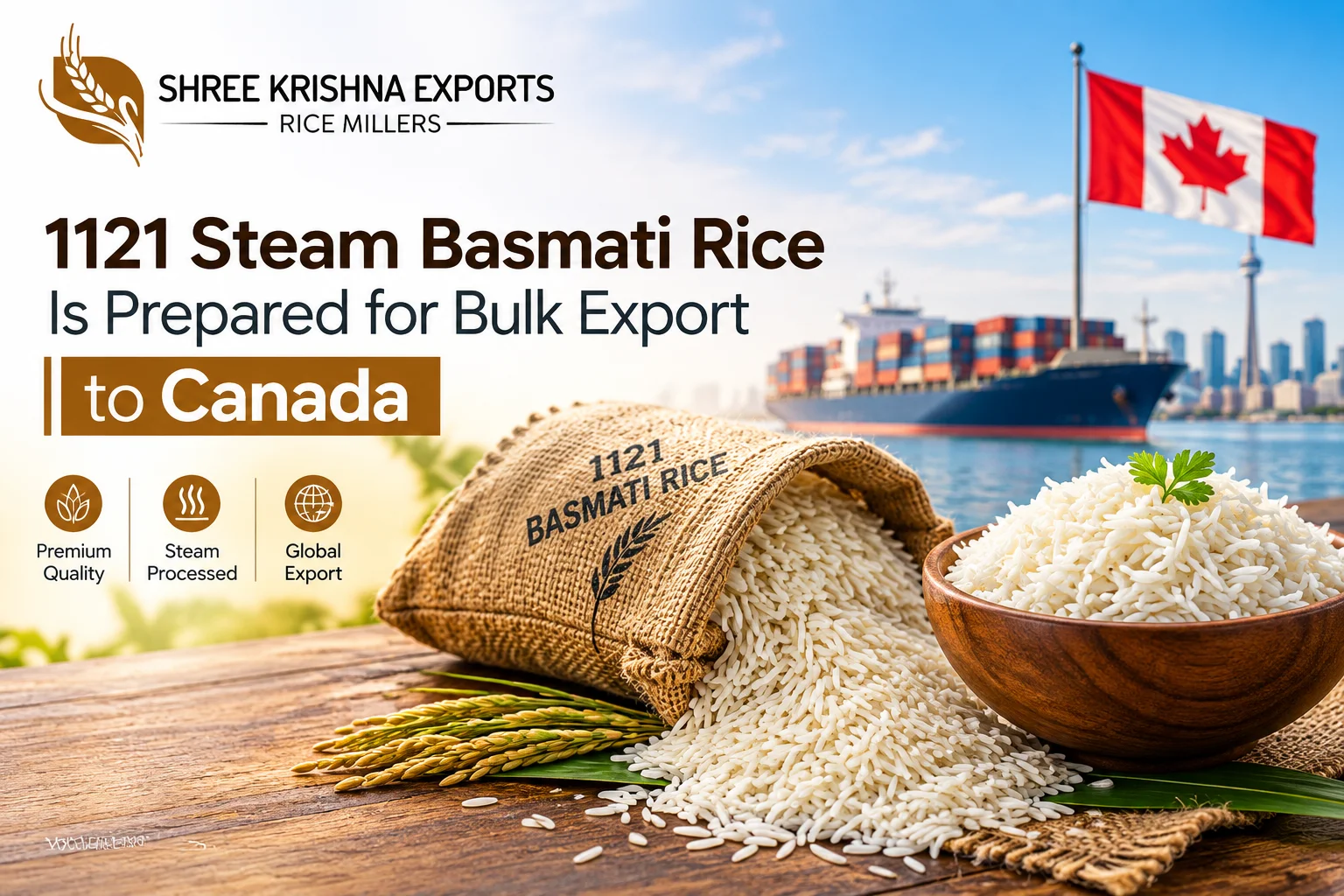
Over time, the demand for 1121 steam basmati rice has increased across Canada. India, being the largest producer of the same, is successfully catering to this bulk demand. Manufacturers like Shree Krishna Exports ensure quality supply and that is why the production and supply of basmati involves several carefully managed stages. It starts from selecting suitable paddy to processing, grading and ageing to packing and shipment; each of these steps involves quality and consistency.
These well-organized processes help ensure that the rice is ready for long-distance transportation and meets the specifications agreed with the Canadian buyers. In this blog, we are sharing all the required steps that help a reliable producer and exporter prepare for bulk export to Canada.
Harvesting Organic and Premium Quality 1121 Basmati Paddy
The process begins with the selection of suitable 1121 Basmati paddy. Grain characteristics, maturity and overall condition of the paddy are essential to consider before we start its processing. Cleaning removes stones, dust, straw and other unwanted material that could affect the finished rice. This initial screening is important because better raw material provides a more consistent base for bulk production.
Processing Paddy for Producing Long and Uniform Grains
After successful harvesting and cleaning the paddy passes through milling equipment to remove the husk and obtain rice grains. It is then further processed and sorted to help separate unwanted or damaged grains. Among all the processes, grading is considered highly essential as it helps maintaining the quality of rice grains according to the requirement of Canadian buyers. Exporters must ensure that the quality and consistency of 1121 steam basmati rice matches the export quality required.
Proper Steam Treatment to Get Desired Quality
As the name says, steam treatment is must when producing 1121 steam basmati. In this process, controlled steaming followed by careful drying helps develop the desired characteristics of the finished grain. Manufacturers or producers are aware of the fact that processing conditions can influence texture, appearance and cooking performance. That is why, maintaining consistency during this stage becomes highly important when preparing large quantities for a single export order.
Sorting and Grading Bring Consistency to Bulk Lots
After processing, the rice is sorted and graded according to the required specifications. The objective is to create a finished lot with consistent grain characteristics rather than noticeable variation from one bag to another. Common quality parameters considered before export include the uniform appearance, proper grain length, broken percentage, moisture, foreign matter, grain appearance, and cooking performance.
Pre-Shipment Testing to Confirm Agreed Specifications
Before packing, the finished rice undergoes quality checks against the specifications agreed with the Canadian buyer. Depending on the order, these checks may cover moisture, broken grains, cleanliness, appearance and other relevant characteristics. An approved sample can also be retained as a reference, particularly when the buyer plans regular imports. It is the exporter’s responsibility to ensure that 1121 steam basmati rice is ISO, FSSAI, and APEDA approved along with required Canadian standards.
Export Packaging Protects Rice during Transit
After quality approval, the rice is packed in the packaging required by the customer for the shipment. Packaging must be strong enough for handling and long-distance transportation while helping protect the product from moisture and contamination. The export container should also be clean and dry before loading. Proper stacking and secure loading of rice bags help minimize the risk of these bags getting damaged during transit.
Conclusion
Preparing 1121 steam basmati rice for bulk export to Canada requires attention at every stage, beginning with suitable paddy and continuing through milling, steam treatment, grading, quality assessment and packaging. When these stages are managed carefully, the finished rice can maintain consistent characteristics from processing facility to overseas destination. We at Shree Krishna Exports work with international buyers to support reliable sourcing and export preparation for Canadian markets.
FAQs – Frequently Asked Questions
The process generally involves paddy selection, cleaning, milling, steam treatment, drying, grading, quality assessment and export packaging.
Controlled steam treatment helps develop the desired characteristics of the finished rice, including its texture, appearance and cooking performance.
Buyers can discuss requirements related to grain characteristics, broken percentage, moisture, cleanliness, packaging and cooking performance.
Suitable packaging, clean and dry containers, secure loading and proper stacking help protect bulk rice during international transportation.